
Industry Insights
Lightweight vs Heavyweight Fabrics in Activewear

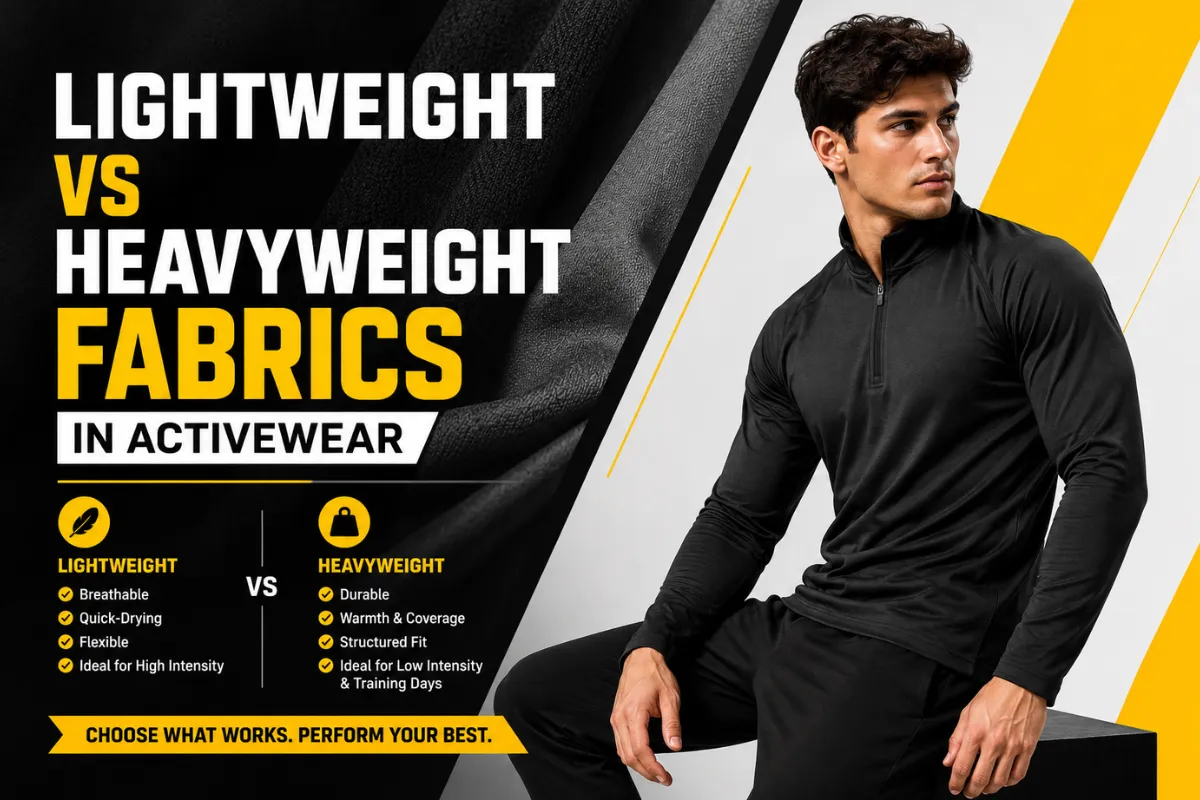
1. Introduction: Why Fabric Weight Matters in Activewear
When people start a sportswear or activewear brand, they usually focus on designs, colors, logos, and trends. But in real manufacturing, the first thing that decides product success is not design it is fabric weight.
Fabric weight decides how a product behaves on the body. It controls how breathable it feels, how durable it is, how it performs during workouts, and even how your customer emotionally perceives your brand.
In simple terms, lightweight fabrics are made for movement and comfort. Heavyweight fabrics are made for structure, durability, and premium feel.
If you use the wrong fabric weight, even a perfect design will fail in real-world use. That is why understanding this topic is not optional for a serious sportswear brand, it is a core product decision.
2. Understanding Fabric Weight in Simple Terms
Fabric weight means how heavy or dense the fabric is. In manufacturing, we measure it using GSM (grams per square meter).
But instead of treating GSM like a technical number, think of it like this:
- Lower GSM = lighter, airier, more breathable fabric
- Higher GSM = thicker, heavier, more structured fabric
Simple real-life explanation:
| Fabric Weight | What it feels like | When people notice it |
| Light | Feels cool and airy on skin | During workouts and running |
| Medium | Balanced comfort and structure | Daily gym use |
| Heavy | Thick, warm, structured feel | Hoodies and winter wear |
From a manufacturing perspective, GSM is important because it affects stitching strength, stretch behavior, sweat handling, and final product category.
3. Lightweight Fabrics in Activewear
3.1 What lightweight fabrics actually mean
Lightweight fabrics are designed to reduce pressure on the body. The idea is simple: the wearer should feel free, not restricted.
These fabrics are engineered to allow air movement and quick sweat evaporation, which is essential for gym and sports performance.
3.2 Common lightweight fabrics used in sportswear
- Lightweight polyester knits
- Polyester-spandex blends (low GSM)
- Microfiber performance fabrics
- Thin interlock knits
3.3 How lightweight fabrics behave in real use
When someone wears lightweight activewear during a workout:
- The fabric does not stick heavily to the body
- Sweat dries faster instead of staying trapped
- The body feels cooler during movement
- Clothes feel almost “invisible” during training
This is why lightweight fabrics are preferred for performance-focused gym wear.
3.4 Benefits of lightweight fabrics
| Benefit | Simple explanation |
| Breathability | Air moves through fabric easily, keeping body cool |
| Quick drying | Sweat does not stay on fabric for long |
| Flexibility | Easier movement during exercise |
| Comfort | Less weight on body during long workouts |
3.5 Limitations of lightweight fabrics
Even though they are great for performance, they have some limitations:
- If quality is low, fabric can feel too thin
- Not suitable for cold weather
- Needs proper engineering to avoid transparency issues
- Slightly less durable compared to heavier fabrics
4. Heavyweight Fabrics in Activewear
4.1 What heavyweight fabrics actually mean
Heavyweight fabrics are denser materials that provide structure, warmth, and a premium feel.
They are not designed for speed or breathability. Instead, they are designed for comfort, durability, and lifestyle wear.
4.2 Common heavyweight fabrics used
- Heavy cotton-poly blends
- Fleece-backed polyester
- Thick interlock knits
- Brushed terry fabrics
4.3 How heavyweight fabrics behave in real use
When someone wears heavyweight activewear:
- The garment feels more solid and structured
- It holds shape even after repeated use
- It provides warmth in cold environments
- It feels more premium and “fashion-based”
This is why hoodies and tracksuits usually use heavier fabrics.
4.4 Benefits of heavyweight fabrics
| Benefit | Simple explanation |
| Durability | Fabric lasts longer and resists wear |
| Structure | Clothes look more premium and shaped |
| Warmth | Keeps body warm in cold weather |
| Stability | Fabric does not lose form easily |
4.5 Limitations of heavyweight fabrics
- Can feel too hot during intense workouts
- Not ideal for running or cardio sessions
- Takes longer to dry after sweating
- Less flexible for fast movement sports
5. Lightweight vs Heavyweight: Direct Comparison
| Feature | Lightweight Fabrics | Heavyweight Fabrics |
| Comfort in gym | High | Medium |
| Breathability | Very high | Low to medium |
| Durability | Medium | High |
| Warmth | Low | High |
| Drying speed | Fast | Slow |
| Best usage | Training, running, summer wear | Hoodies, winter wear, lifestyle wear |
6. How Fabric Weight Impacts Athletic Performance
Fabric weight changes how the body performs during activity.
In real workout situations:
- Lightweight fabric helps reduce overheating during cardio
- Heavyweight fabric supports comfort during cold training
- Lightweight fabrics reduce fatigue in long sessions
- Heavyweight fabrics improve stability in lifestyle wear
Simple understanding:
| Situation | Best Fabric Type |
| Running or cardio | Lightweight |
| Gym training | Lightweight or medium |
| Outdoor winter training | Heavyweight |
| Casual sportswear | Heavyweight |
7. Choosing Fabric Weight Based on Product Type
This is where manufacturing experience matters the most.
Gym T-Shirts and Training Tops
- Best choice: lightweight fabrics
- Reason: keeps body cool during sweat-heavy workouts
- Manufacturing insight: GSM should stay low to avoid heat retention
Compression Wear
- Best choice: lightweight stretch fabrics
- Reason: supports muscles without restricting movement
- Important note: stretch ratio matters more than thickness
Hoodies and Tracksuits
- Best choice: heavyweight fabrics
- Reason: warmth and structured appearance
- Manufacturing insight: fleece-backed fabric gives best result
Running and Outdoor Wear
- Best choice: lightweight performance fabrics
- Reason: fast drying and temperature control
- Key requirement: sweat must not stay on surface
8. How Brands Should Decide Fabric Weight Strategically
Choosing fabric weight is not random. It is a brand positioning decision.
Key decision factors:
| Factor | Lightweight Choice | Heavyweight Choice |
| Customer type | Athletes & gym users | Lifestyle & casual wear users |
| Climate | Hot regions | Cold regions |
| Product purpose | Performance wear | Comfort wear |
| Brand positioning | Functional sportswear | Premium streetwear sportswear |
Manufacturing insight:
Strong brands do not use one fabric weight for everything. They build collections with different performance levels.
9. Common Mistakes Brands Make
From real manufacturing experience, these mistakes are very common:
- Using heavy fabric for gym performance wear
- Using light fabric for hoodies (loses structure)
- Ignoring GSM and focusing only on look
- Copying competitors without testing
- Using same fabric weight for all products
What actually happens:
Products either become uncomfortable, low quality in performance, or mismatched with customer expectations.
10. How We Help Brands Choose Fabric Weight
As a manufacturer, fabric selection is not guesswork for us. It is a structured process based on product function.
Our process:
- We study your product category first
- We recommend GSM based on usage environment
- We develop sample fabrics before bulk production
- We test fabric under real movement conditions
- We adjust weight based on performance feedback
This ensures your product performs well not just in samples but in real customer use.
FAQs
Lightweight fabrics are designed to feel breathable and reduce heat during movement, while heavyweight fabrics are designed to provide structure, durability, and warmth. The main difference is not just thickness but how the fabric behaves on the body during use.
Lightweight moisture-wicking fabrics are best for gym wear because workouts generate heat and sweat. If the fabric is heavy, it traps heat and makes the user uncomfortable. Lightweight fabrics allow airflow and help sweat dry faster, improving workout performance.
Yes, especially for performance-based clothing like gym t-shirts, running wear, and training tops. It reduces body heat buildup and improves mobility. However, it must be engineered properly to avoid being too thin or weak.
Heavyweight fabric is best for hoodies, tracksuits, and winter activewear. It is used when the goal is warmth, structure, and premium feel rather than performance speed or breathability.
GSM stands for grams per square meter. It tells how heavy or dense a fabric is. Lower GSM means lighter fabric, while higher GSM means thicker and heavier fabric. It helps manufacturers decide how the fabric will perform in real use.
Yes, generally they last longer because they are denser and more resistant to wear and tear. However, durability also depends on fiber quality and construction, not just weight alone.
Lightweight polyester or polyester-spandex blends are best because they allow airflow and dry quickly. In hot climates, heavy fabrics trap heat and reduce comfort during workouts.
Yes, if they are made with high-quality fibers and proper construction techniques. Durability is not only about weight it also depends on yarn quality, knitting method, and finishing process.
Premium brands use a combination. They use lightweight performance fabrics for training wear and heavyweight structured fabrics for lifestyle collections like hoodies. The key is product-specific selection, not one fabric for everything.
You should always start with product purpose, then consider climate, target customer, and price positioning. Once these are clear, fabric weight selection becomes a structured decision rather than guesswork.
Conclusion: Choosing the Right Fabric Weight for Real Performance
Fabric weight is one of the most important decisions in sportswear manufacturing because it directly affects how a product performs in real life.
Lightweight fabrics are built for movement, sweat control, and performance. Heavyweight fabrics are built for structure, durability, and lifestyle appeal.
Successful brands do not choose one over the other. They strategically use both depending on product type and customer need.
When fabric weight is selected correctly, the product feels right, performs better, lasts longer, and strengthens brand reputation in the market.


