
Industry Insights
Fit, Comfort & Performance: What Sportswear Brands Often Overlook

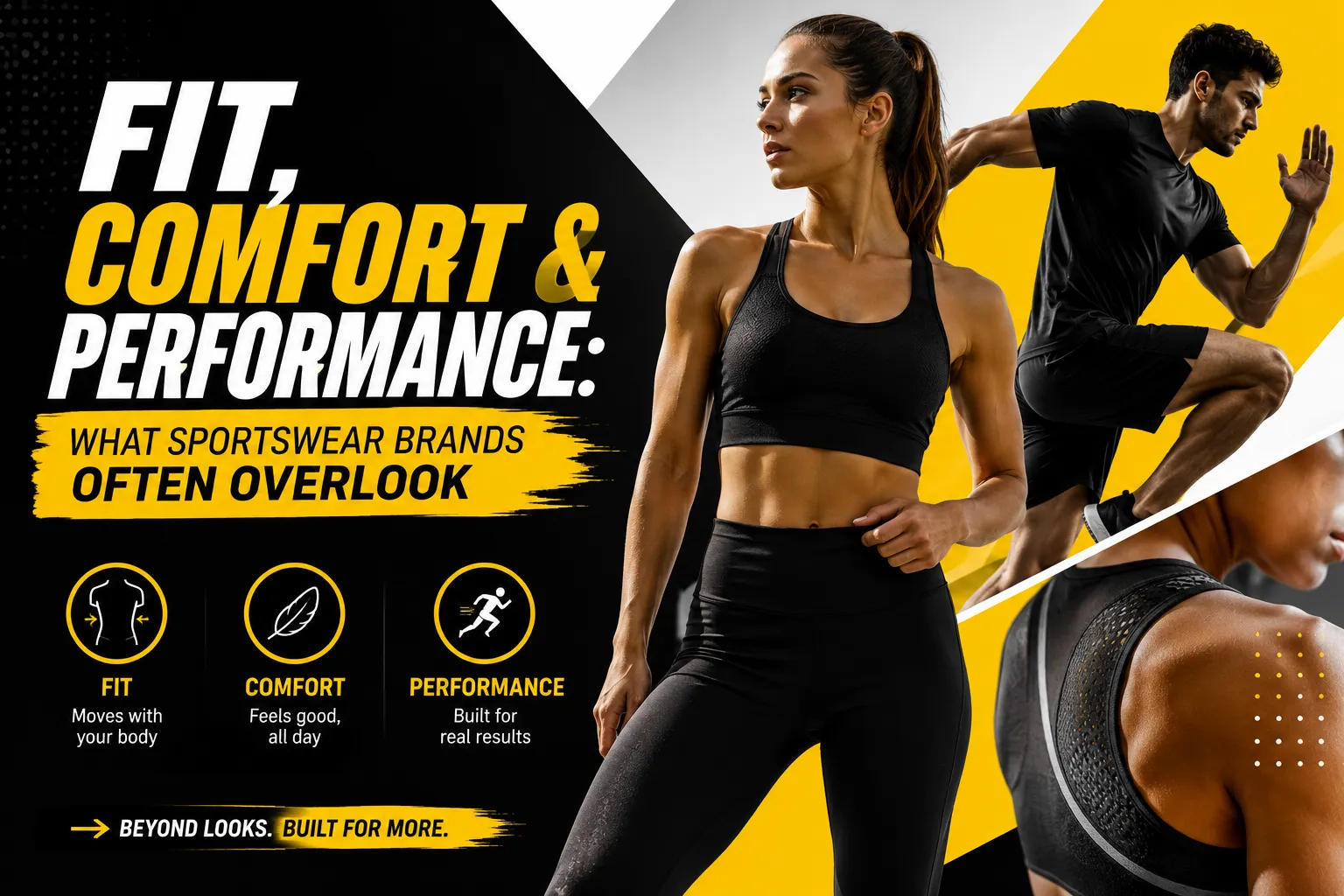
Launching a sportswear brand involves hundreds of decisions. You’ll spend time perfecting your logo, choosing brand colors, selecting packaging, and planning your marketing strategy. While all of these elements matter, they’re not what determine whether customers come back for a second purchase.
The real test begins when someone wears your product.
If a training shirt feels restrictive during a workout, leggings lose their shape after a few wears, or a hoodie feels uncomfortable despite looking great online, customers notice immediately. Those experiences shape product reviews, repeat purchases, and ultimately, your brand’s reputation.
This is why successful sportswear brands don’t focus on appearance alone. They invest just as much attention in how their products fit, how they feel, and how they perform during everyday use.
Whether you’re developing gym wear, team uniforms, compression apparel, or premium activewear, these three factors should be part of every product decision from the beginning, not something to fix after production.
In this guide, we’ll explain why fit, comfort, and performance play such an important role in sportswear and how thoughtful product development helps create apparel your customers will enjoy wearing again and again.
Why Great Design Alone Doesn’t Build a Successful Sportswear Brand
A modern design may encourage someone to buy your product for the first time, but the overall wearing experience determines whether they’ll buy from you again.
Think about your own shopping habits. You probably remember clothing that looked excellent in photos but didn’t feel right once you wore it. Perhaps it felt too tight around the shoulders, too loose around the waist, or became uncomfortable during movement.
Your customers evaluate sportswear in exactly the same way.
Athletes, gym-goers, and active individuals expect clothing that supports movement instead of restricting it. They want fabrics that remain comfortable during long workouts, garments that hold their shape after repeated washing, and products that perform as promised.
When these expectations are met, customers are more likely to trust your brand, recommend your products to others, and return for future purchases.
If you’re planning a collection of custom Gym Wear or Activewear, it’s worth considering these performance factors before finalizing your designs. Small improvements during product development often have a much greater impact than cosmetic changes made later.
Understanding the Difference Between Fit, Comfort, and Performance
These three terms are often used together, but they don’t mean the same thing.
Understanding the difference helps you make better decisions when developing new products.
What Is Fit?
Fit refers to how a garment sits on the body and how it moves with the wearer.
A well-fitted sportswear garment should allow natural movement without feeling overly tight or unnecessarily loose. The ideal fit also depends on the purpose of the product.
For example, a compression shirt is designed to fit much closer to the body than an oversized training hoodie. Likewise, a running T-shirt requires different proportions than a casual sweatshirt.
Choosing the right fit isn’t about following fashion trends. It’s about designing products that perform as intended while matching your customers’ expectations.
What Is Comfort?
Comfort is influenced by several factors working together.
The fabric should feel pleasant against the skin, seams shouldn’t cause irritation, and the garment should move naturally during physical activity.
Elements such as fabric weight, stretch, breathability, and construction all contribute to comfort.
A customer may not know why one training shirt feels better than another, but they’ll immediately notice the difference during a workout.
That’s why comfort is often one of the biggest reasons customers become loyal to a sportswear brand.
What Is Performance?
Performance refers to how well a garment supports its intended activity.
Depending on the product, this may include moisture management, flexibility, durability, shape retention, or freedom of movement.
For example, compression apparel should maintain consistent support without limiting mobility, while running apparel should remain lightweight and breathable throughout extended activity.
When fit, comfort, and performance work together, customers experience a product that feels natural to wear instead of something they constantly need to adjust.
How Fabric Choice Influences Every Wear Experience
Even the best design cannot compensate for choosing the wrong fabric.
The material you select affects almost every aspect of the finished garment, from comfort and flexibility to durability and overall performance.
Polyester remains one of the most popular choices for performance sportswear because it offers excellent durability, moisture management, and color retention. Cotton, on the other hand, provides a naturally soft feel that many customers prefer for lifestyle and casual athletic apparel.
Blended fabrics combine the strengths of different fibers, while materials containing elastane or spandex add the stretch required for products such as Compression Wear, leggings, and training apparel.
The right fabric depends on how the garment will be used.
A fabric that performs well in a heavyweight hoodie may not be suitable for a lightweight running shirt. Similarly, materials selected for yoga apparel often prioritize softness and flexibility, while team uniforms require durability to withstand regular training sessions and repeated washing.
This is why experienced manufacturers evaluate the complete product instead of recommending the same fabric for every collection.
If you’re still comparing materials for your next project, our guide on Choosing the Right Fabric for Sportswear can help you understand how different fabrics influence performance, durability, and customer satisfaction.
Why Every Sport Has Different Performance Requirements
One of the most common mistakes new brands make is assuming that one garment can serve every activity.
In reality, every sport places different demands on apparel.
A gym athlete needs unrestricted movement during strength training. A runner expects lightweight fabrics that remain comfortable over long distances. Team sports often require durability for frequent use, while yoga apparel prioritizes flexibility and softness.
These differences influence everything from fabric selection and garment construction to fit and finishing details.
Designing sportswear without considering the intended activity often results in products that look impressive but fail to meet customer expectations once they’re worn.
In the next section, we’ll look at how different sports influence garment fit, the construction details that improve comfort, and the common product development mistakes that can affect customer satisfaction long after production is complete.
Why the Right Fit Depends on the Sport
No single fit works for every type of sportswear. A garment designed for weightlifting won’t perform the same way on a runner, just as a football jersey has different requirements than a yoga top.
Understanding how your customers use the product helps you make better decisions before production begins.
| Sport or Activity | What Customers Expect |
| Running | Lightweight fabrics, unrestricted movement, and breathability |
| Gym Training | Stretch, durability, and a comfortable athletic fit |
| Yoga & Pilates | Soft fabrics with excellent flexibility and recovery |
| Team Sports | Durability, mobility, and consistent comfort during repeated use |
| Cycling | A close-fitting design that reduces excess fabric while allowing freedom of movement |
These differences may seem small, but they significantly influence how customers experience your products. Designing sportswear around the intended activity creates apparel that performs as expected instead of simply looking good.
If your collection includes Sports Uniforms or Fitness Wear, planning the fit around the sport is one of the most effective ways to improve customer satisfaction.
Small Construction Details That Make a Big Difference
Customers rarely notice individual construction details when they first receive a garment. What they do notice is how comfortable it feels after wearing it for several hours.
That’s where thoughtful product development makes the biggest difference.
Features such as flat seams help reduce irritation during movement, while well-designed waistbands improve comfort without creating unnecessary pressure. Sleeve construction, neckline finishing, and hem quality also influence how naturally a garment fits throughout the day.
For stretch garments such as Compression Shirts, Compression Shorts, and leggings, the placement of seams is just as important as the fabric itself. Poor seam placement can limit movement or create discomfort, even when high-quality materials are used.
These details may not appear in product photos, but they’re often the reason customers describe a product as comfortable, supportive, or premium.
Why Poor Fit Can Cost Your Brand More Than You Think
Poor fit doesn’t just affect individual customers it affects your business.
When sportswear doesn’t meet customer expectations, brands often experience:
- Higher return and exchange rates.
- Negative product reviews.
- Lower repeat purchase rates.
- Increased customer service inquiries.
- Reduced confidence in future product launches.
Many of these problems begin during product development rather than after production.
A garment that feels too restrictive across the shoulders or loses its shape after regular use can quickly damage customer trust, regardless of how attractive it looks online.
Investing time in improving fit before bulk production is usually far more cost-effective than dealing with dissatisfied customers later.
Common Mistakes Sportswear Brands Make
Many growing brands encounter similar challenges when developing their first collections. Fortunately, most of these issues can be avoided with proper planning.
Choosing Fabrics Based Only on Cost
Lower-priced materials may reduce production costs initially, but they can also affect comfort, durability, and customer satisfaction.
Your fabric should support the purpose of the garment, not just your budget.
Copying Another Brand’s Fit
Every brand serves a different audience.
A fit designed for professional athletes may not suit customers looking for everyday training apparel.
Your sizing and garment proportions should reflect your own market rather than simply replicating another product.
Skipping Product Testing
A sample may look excellent on a mannequin but perform differently during real-world use.
Wear testing often reveals issues with movement, comfort, or overall fit that aren’t visible during an initial inspection.
Treating Every Product the Same
A hoodie, running shirt, and compression top should never be developed using the same approach.
Each product has different performance requirements, customer expectations, and construction priorities.
Why Sampling Is an Essential Part of Product Development
One of the smartest investments a sportswear brand can make is producing samples before moving into bulk manufacturing.
Sampling allows you to evaluate more than appearance.
It gives you the opportunity to assess:
- Overall fit.
- Comfort during movement.
- Fabric performance.
- Construction quality.
- Branding placement.
- Customer feedback.
Making adjustments at this stage is significantly easier than making changes after production has already begun.
If you’re planning your first collection, our guide on Realistic Production Timelines for Custom Sportswear explains how sampling fits into the overall manufacturing process and why allowing enough time for product refinement often leads to better results.
If you’re still deciding on production quantities, you may also find our article on What Is MOQ in Sportswear Manufacturing? helpful before placing your first order.
How We Help Brands Build Better Sportswear
At Natural Grace Sports, we understand that successful sportswear isn’t created by focusing on a single element.
Every collection is the result of thoughtful decisions about fabrics, fit, construction, branding, and quality.
That’s why we work closely with brands throughout the product development process.
Whether you’re launching a private-label fitness collection, expanding your Activewear range, or producing custom Gym Wear and Sports Uniforms, we help you choose materials and construction methods that support the purpose of each garment.
Our goal isn’t simply to manufacture products, it’s to help you develop sportswear your customers enjoy wearing and confidently recommend to others.
Frequently Asked Questions
Proper fit improves comfort, supports movement, and enhances the overall wearing experience. It also reduces returns and increases customer satisfaction.
Yes. Fabric influences breathability, flexibility, moisture management, durability, and overall comfort, making it one of the most important decisions during product development.
No. Different sports require different levels of mobility, support, and comfort. A running shirt, compression garment, and training hoodie each have unique performance requirements.
Sampling helps identify issues with fit, fabric, construction, and branding before full-scale manufacturing, reducing costly revisions later.
Focus on creating products that balance fit, comfort, performance, and durability. A well-designed garment should not only look professional but also perform consistently during everyday use.
Final Thoughts
Customers may discover your brand because of attractive designs or effective marketing, but they stay because your products meet their expectations every time they wear them.
Fit, comfort, and performance aren’t features that can be added at the end of the manufacturing process. They’re built into every stage of product development, from fabric selection and garment construction to sampling and quality control.
Taking the time to make informed decisions before production begins helps you create sportswear that delivers a better wearing experience, strengthens your reputation, and encourages repeat business.
If you’re planning your next sportswear collection and want guidance on fabrics, garment construction, fit, or product development, we’re here to help. At Natural Grace Sports, we work with brands around the world to develop custom sportswear that combines quality, performance, and comfort so you can launch products with confidence and build a brand your customers trust.


