
Industry Insights
Choosing the Right Fabric for Gym & Activewear

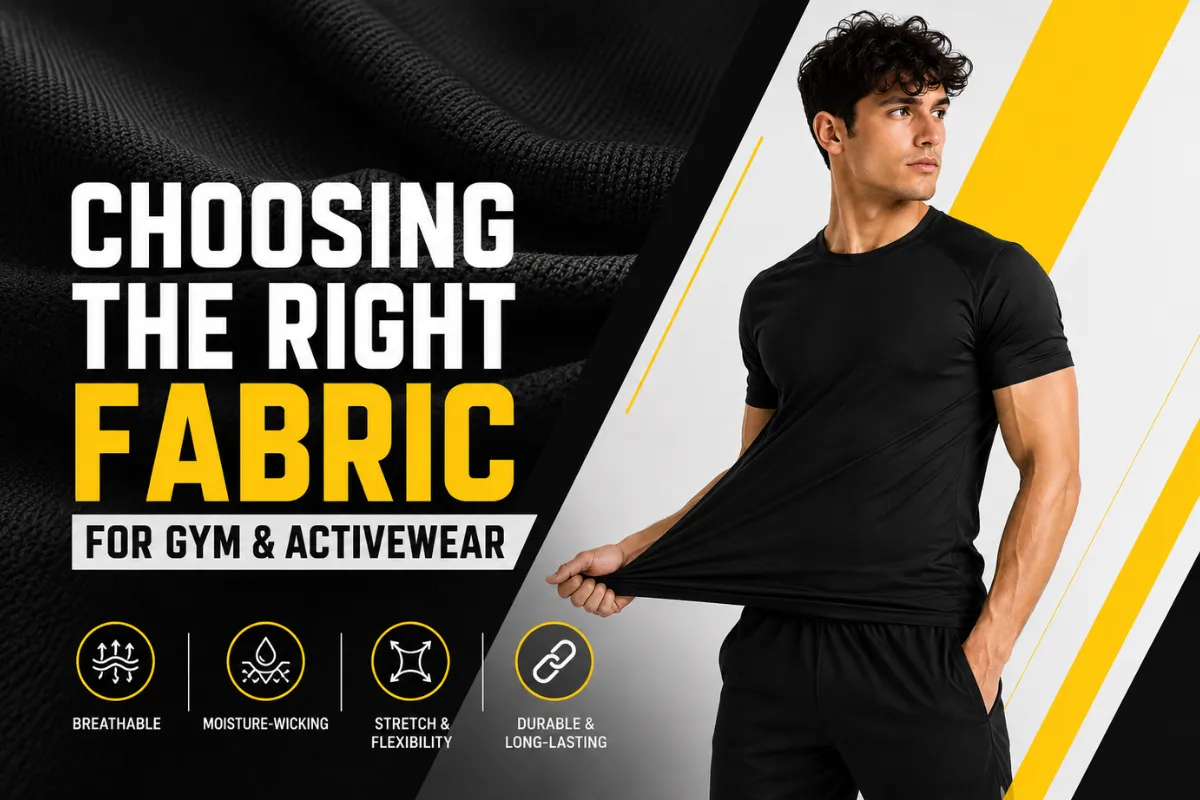
1. Introduction: Why Fabric Choice Defines Performance
When you are building a gym or activewear brand, fabric is not just a technical detail. It is the base of your entire product. If the fabric is wrong, even the best design will fail in real use.
Think about it simply. Your customer is not buying fabric. They are buying comfort, movement, confidence, and performance during workouts. That experience is fully controlled by the fabric you choose.
If the fabric is too heavy, the body overheats. If it absorbs too much sweat, it becomes uncomfortable. If it has poor stretch, it restricts movement.
So instead of asking only “why fabric matters,” the real question is “how do you choose the right fabric for each type of activewear product.”
That is exactly what this guide explains in a simple, practical way.
2. Understanding Performance Fabrics in Activewear
Performance fabrics are specially made materials designed for movement, sweat, and repeated use. They behave differently from normal clothing fabrics.
How performance fabrics work in real use:
- They pull sweat away from the skin instead of holding it
- They stretch when the body moves and return back to shape
- They stay light even during long workouts
- They handle repeated washing without losing structure
Simple comparison:
| Normal Clothing Fabric | Activewear Performance Fabric |
| Feels fine for casual use | Built for movement and sweat |
| Gets heavy with sweat | Stays light and dry |
| Limited stretch | Multi-direction stretch |
| Shape changes over time | Maintains fit after use |
So when you are selecting fabric, you are actually selecting how your customer feels during every workout session.
3. Key Fabric Types Used in Gym & Activewear Manufacturing
Now let’s break down the main fabrics used in sportswear production and, more importantly, how you should use them correctly.
3.1 Polyester
Polyester is the most commonly used fabric in gym wear because it performs well in almost every condition.
How to use polyester correctly
- Use it for training wear and daily gym clothing
- Combine it with other fibers for better comfort
- Choose lightweight versions for hot climates
Why brands prefer it
- It dries quickly after sweat
- It stays light during workouts
- It does not shrink or lose shape easily
Best products
- Gym t-shirts
- Running shorts
- Training kits
3.2 Spandex (Lycra / Elastane)
Spandex is not usually used alone. It is added in small percentages to give stretch.
How to use spandex properly
- Keep it between 5% to 20% depending on product type
- Use low percentage for t-shirts
- Use higher percentage for leggings and compression wear
What it actually solves
Without spandex, clothes feel stiff. With spandex, the fabric moves with the body instead of against it.
Best products
- Compression shirts
- Gym leggings
- Yoga sets
3.3 Nylon
Nylon is used when you want a smoother, more premium feel.
How to use nylon correctly
- Use it for high-end collections
- Combine it with spandex for performance wear
- Avoid using it in very low-cost mass products
What makes it different
It feels softer than polyester and gives a more premium finish on the skin.
Best products
- Premium activewear sets
- Seamless gym wear
- High-performance training gear
3.4 Cotton Blends
Cotton is comfortable but not ideal for heavy workouts on its own.
How to use cotton correctly
- Never use pure cotton for intense gym wear
- Always blend it with polyester or spandex
- Use it for lifestyle or light activity clothing
Simple truth
Cotton absorbs sweat and holds it. That is why it feels heavy during workouts.
Best products
- Hoodies
- Warm-up suits
- Casual gym wear
3.5 Polyester-Spandex Blends
This is the most practical and widely used fabric combination in activewear manufacturing.
How to use it correctly
- Adjust spandex percentage based on product function
- Use lighter blends for tops
- Use higher stretch blends for leggings and compression wear
Why it works so well
It gives you a balance. Polyester handles sweat. Spandex handles movement.
Best products
- Gym sets
- Leggings
- Training wear
- Compression outfits
4. How Fabric Impacts Athletic Performance (Real Experience)
Fabric directly changes how a person feels during exercise.
Here is what actually happens in real workouts:
- If fabric does not breathe → body overheats quickly
- If fabric absorbs sweat → clothes become heavy and sticky
- If fabric lacks stretch → movement feels restricted
- If fabric is too thin → durability becomes an issue
Simple breakdown
| Fabric Behavior | What the user feels |
| Breathable fabric | Comfortable and cool |
| Moisture-wicking | Dry even during sweat |
| Stretchable fabric | Easy movement |
| Poor quality fabric | Discomfort and irritation |
This is why fabric selection is not optional. It is the core of product performance.
5. Fabric Selection Based on Product Type (How to Decide)
Instead of guessing fabric, always decide based on product function.
Gym T-Shirts and Tanks
- Best choice: lightweight polyester blends
- Why: keeps body cool and dry
- How to decide: always prioritize breathability over thickness
Compression Wear
- Best choice: high spandex blend fabrics
- Why: supports muscles and tight fit
- How to decide: higher stretch = better compression control
Leggings and Yoga Wear
- Best choice: polyester + spandex mix
- Why: flexibility and shape retention
- How to decide: ensure fabric recovers after stretching
Hoodies and Warm-Up Sets
- Best choice: cotton blends or fleece blends
- Why: warmth and comfort
- How to decide: prioritize softness over performance stretch
6. Common Fabric Mistakes New Brands Make (And How to Avoid Them)
Most new brands don’t fail because of design. They fail because of wrong fabric decisions.
Common mistakes and how to fix them:
- Using cotton for gym wear
Fix: always use synthetic blends for performance wear - Choosing fabric only based on price
Fix: test fabric under real workout conditions first - Ignoring stretch recovery
Fix: always check if fabric returns to shape after stretching - Not considering sweat behavior
Fix: choose moisture-wicking fabrics for all gym products - Copying competitors blindly
Fix: match fabric to your own target customer needs
7. How We Help Brands Choose Fabric the Right Way
We don’t just supply sportswear. We help you build a product that performs in real life.
Our process is simple
- We understand your target market first
- We suggest fabric based on usage, not trends
- We provide fabric samples before bulk production
- We test fabric for real workout conditions
- We adjust blends based on your brand positioning
This ensures your product is not just made, but engineered for performance.
8. Quality Testing in Fabric Selection (How We Ensure Consistency)
Before production, every fabric goes through testing.
| Test Type | What it checks |
| Stretch test | How fabric moves and recovers |
| Wash test | Whether it shrinks or fades |
| Sweat test | How it handles moisture |
| Durability test | How long it lasts in real use |
Why this matters
A fabric may look good in sample form but fail after a few washes. Testing prevents that risk.
9. Cost vs Quality: How to Choose Smartly
Fabric choice directly affects your brand pricing and positioning.
Simple guide
| Fabric Level | Result |
| Low-cost polyester | Basic entry-level products |
| Blended fabrics | Balanced mid-range products |
| Premium nylon/spandex | High-end performance products |
How to decide
Instead of going cheapest, choose fabric that matches your target customer expectations.
FAQs
Polyester and spandex blends are the most reliable because they balance sweat control and stretch.
Moisture-wicking polyester is best for keeping the body dry.
Yes, it is widely used because it is durable, lightweight, and performance-focused.
A polyester-spandex blend with good stretch recovery.
Because it allows the fabric to stretch and return to its original shape.
Only for light use. It is not suitable for intense workouts.
Mostly nylon and advanced performance blends.
Start with product type, then match fabric to performance needs.
It is fabric designed to move sweat away from the skin.
Yes, fabric blends can be fully customized based on your requirements.
Conclusion: How to Build Better Activewear with Smart Fabric Choices
Choosing fabric is not about guessing or copying. It is about understanding how your product will be used in real life.
If you get the fabric right, everything else becomes easier, comfort improves, performance increases, and your brand builds trust faster.
The smartest approach is simple: always match fabric with function, not just appearance.


