
Industry Insights
Understanding Sportswear Manufacturing Costs: What Every Brand Should Know Before Placing an Order

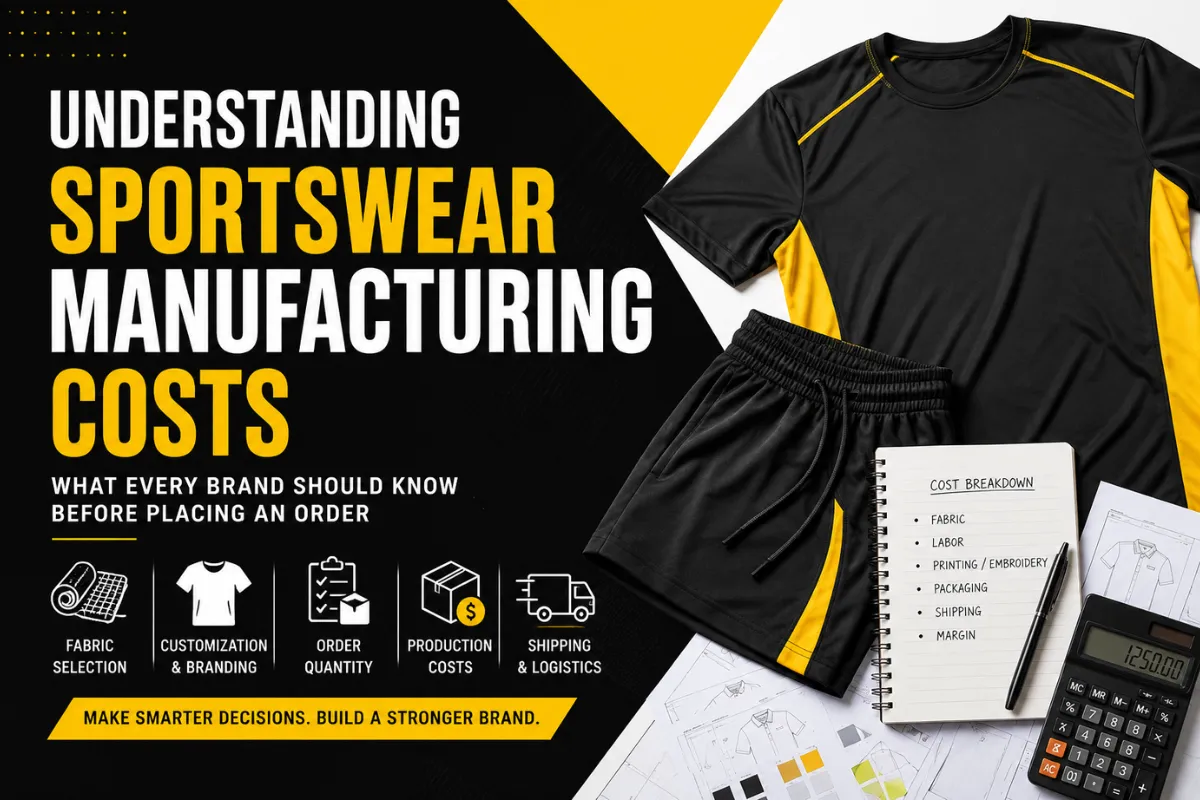
If you’re launching a sportswear brand, expanding your activewear collection, sourcing products for wholesale distribution, or searching for a new manufacturing partner, one question will always come up:
How much does sportswear manufacturing actually cost?
It’s a fair question, but the answer isn’t always straightforward.
Many brand owners are surprised when they request quotes from multiple manufacturers and receive completely different prices for what appears to be the same product. One supplier offers a very low quote, another is significantly higher, and suddenly you’re left wondering which option makes the most sense for your business.
The reality is that sportswear manufacturing costs depend on many factors. Fabric quality, product complexity, customization requirements, order quantities, branding elements, quality control procedures, and shipping costs all play a role in determining the final price.
Understanding these factors helps you make better sourcing decisions, protect your profit margins, and avoid costly mistakes.
Whether you’re a startup activewear brand, gym clothing company, wholesaler, distributor, importer, or private label business, this guide will help you understand what goes into sportswear manufacturing costs and how to get the best value from your investment.
Why Understanding Manufacturing Costs Matters
Many buyers focus only on getting the lowest price.
While keeping costs under control is important, focusing solely on price can sometimes lead to bigger problems later.
A lower manufacturing cost doesn’t always mean a better deal.
In some cases, it may result in:
- Lower-quality fabrics
- Poor stitching and construction
- Inconsistent sizing
- Delayed production
- Communication issues
- Product returns and customer complaints
Understanding manufacturing costs allows you to evaluate suppliers based on overall value rather than price alone.
Benefits of Understanding Your Production Costs
| Benefit | Why It Matters |
| Better Profit Margins | Helps you price products correctly |
| Smarter Product Development | Prevents unnecessary spending |
| Better Supplier Comparison | Makes quotes easier to evaluate |
| Improved Inventory Planning | Helps forecast production budgets |
| Reduced Risk | Avoids expensive production mistakes |
The more you understand how costs are calculated, the easier it becomes to make decisions that support long-term business growth.
Why Do Different Manufacturers Give Different Quotes?
This is one of the most common questions buyers ask.
You send the same product design to five manufacturers and receive five completely different prices.
Why?
Because manufacturers often differ in several key areas.
| Factor | Possible Difference Between Manufacturers |
| Fabric Quality | Standard vs premium materials |
| Labor Standards | Skilled vs lower-cost labor |
| Quality Control | Basic vs comprehensive inspections |
| Production Capacity | Small workshop vs large factory |
| Equipment | Modern vs outdated machinery |
| Experience | Specialized vs general manufacturing |
| Communication | Dedicated support vs limited assistance |
A manufacturer offering a lower quote may be using lower-quality materials or fewer quality control procedures.
A higher quote may include better materials, stricter quality inspections, and more reliable production processes.
This is why it’s important to understand what is included in a quote rather than comparing prices alone.
Fabric Selection: One of the Biggest Cost Factors
Fabric is often one of the largest contributors to sportswear manufacturing costs.
Many first-time brand owners assume that all sportswear fabrics are the same.
They’re not.
Two shirts may look nearly identical in photos, but the fabric quality can be dramatically different.
Common Sportswear Fabrics
| Fabric Type | Typical Use |
| Polyester | Sports uniforms, training apparel |
| Polyester-Spandex Blend | Activewear, compression wear |
| Cotton Blend | Casual sportswear |
| Recycled Polyester | Sustainable sportswear |
| Performance Fabrics | Premium activewear |
Why Better Fabric Costs More
Higher-quality fabrics often provide:
- Better moisture management
- Greater durability
- Improved stretch and recovery
- Better comfort
- Enhanced breathability
- Longer lifespan
For example, if you’re creating a premium activewear brand targeting gym enthusiasts, investing in better materials can improve customer satisfaction and encourage repeat purchases.
However, if you’re targeting budget-conscious consumers, a standard performance fabric may be more suitable.
The key is choosing materials that align with your brand positioning and customer expectations.
Product Complexity and Construction
Not all sportswear products require the same amount of work to manufacture.
A simple training t-shirt requires fewer production steps than a fully customized hoodie or compression garment.
As product complexity increases, manufacturing costs generally increase as well.
Product Complexity Comparison
| Product Type | Complexity Level |
| Basic T-Shirt | Low |
| Tank Top | Low |
| Training Shorts | Low |
| Polo Shirt | Medium |
| Compression Shirt | Medium-High |
| Leggings | High |
| Hoodie | High |
| Sports Uniform | High |
| Performance Jacket | Very High |
What Makes a Product More Expensive?
Several factors contribute to increased manufacturing costs:
- More fabric panels
- Additional stitching
- Complex patterns
- Zippers and accessories
- Special construction techniques
- Performance features
The more components and labor involved, the higher the production cost.
This doesn’t mean complex products aren’t worth producing. It simply means they require more resources to manufacture properly.
Customization and Branding Costs
One of the biggest advantages of custom sportswear manufacturing is the ability to create products that represent your brand.
Customization helps differentiate your products from competitors and build customer loyalty.
However, customization also affects pricing.
Common Customization Options
| Customization Type | Cost Impact |
| Screen Printing | Low-Medium |
| Sublimation Printing | Medium |
| Embroidery | Medium-High |
| Silicone Logos | Medium |
| Reflective Elements | Medium |
| Custom Labels | Medium |
| Custom Packaging | Medium-High |
Private Label Branding
Many growing brands choose private label manufacturing because it allows them to sell products under their own brand name.
Private label customization often includes:
- Woven labels
- Printed neck labels
- Hang tags
- Branded packaging
- Custom sizing labels
While these additions increase production costs, they also help create a professional retail-ready product that strengthens brand recognition.
How MOQ (Minimum Order Quantity) Affects Pricing
MOQ stands for Minimum Order Quantity.
This is one of the most misunderstood aspects of sportswear manufacturing.
Many new brands wonder why manufacturers offer lower pricing on larger orders.
The reason is simple.
Every production run requires setup costs.
These include:
- Pattern preparation
- Material sourcing
- Machine setup
- Production planning
- Quality inspections
Whether you’re producing 100 pieces or 5,000 pieces, many of these costs remain the same.
Larger orders spread these expenses across more units.
Example of Cost Efficiency
| Order Size | Cost Per Unit Trend |
| Small Order | Highest |
| Medium Order | Moderate |
| Large Order | Lower |
| Bulk Production | Lowest |
This is why per-unit pricing often decreases as order quantities increase.
Labor and Production Costs
Every sportswear product goes through multiple production stages before it reaches your customers.
Typical Production Process
| Stage | Description |
| Pattern Making | Product development |
| Fabric Cutting | Preparing garment panels |
| Sewing | Garment assembly |
| Printing | Branding and graphics |
| Embroidery | Premium logo application |
| Finishing | Thread trimming and inspection |
| Packaging | Product preparation |
| Quality Control | Final checks |
Products requiring more labor naturally cost more to produce.
For example, a fully sublimated sports uniform with custom branding will require more production time than a standard training shirt.
Hidden Costs Many Buyers Forget to Consider
One of the biggest mistakes buyers make is focusing only on manufacturing costs.
There are several additional expenses that should be considered during budgeting.
Shipping Costs
Shipping expenses vary depending on:
- Order volume
- Weight
- Destination country
- Delivery method
Shipping Comparison
| Method | Cost | Delivery Speed |
| Air Freight | Higher | Faster |
| Sea Freight | Lower | Slower |
Import Duties and Taxes
Depending on your country, import duties and taxes may apply.
These costs should always be considered when calculating your total landed cost.
Packaging Costs
Packaging can include:
- Polybags
- Retail boxes
- Printed inserts
- Branded packaging
While premium packaging improves customer experience, it also adds to production expenses.
Common Cost Mistakes New Sportswear Brands Make
Many startups make the same mistakes during their first production runs.
Choosing a Manufacturer Based Only on Price
The cheapest quote often looks attractive initially.
However, poor quality, production delays, and customer complaints can quickly eliminate any savings.
Skipping the Sampling Process
Some buyers try to save money by skipping samples.
This can lead to sizing issues, material problems, or design errors during bulk production.
Overcomplicating Early Product Designs
Launching with highly complex products can increase production costs unnecessarily.
Many successful brands start with simpler products and expand later.
Ignoring Shipping Costs
Shipping costs can significantly affect profitability if they aren’t factored into pricing decisions.
How to Reduce Manufacturing Costs Without Sacrificing Quality
Reducing costs doesn’t always mean using cheaper materials.
Smart brands focus on efficiency instead.
Simplify Product Designs
Removing unnecessary complexity can reduce labor costs while maintaining product quality.
Consolidate Color Variations
Producing fewer color options often improves manufacturing efficiency.
Plan Production Quantities Strategically
Larger production runs generally reduce per-unit costs.
Work With Experienced Manufacturers
Experienced manufacturers can recommend cost-saving solutions without compromising quality.
Why the Lowest Manufacturing Quote Can Cost More in the Long Run
Many brands learn this lesson the hard way.
A low quote may save money initially, but it can create larger expenses later through:
- Product returns
- Customer complaints
- Replacements
- Lost customers
- Brand reputation damage
When evaluating suppliers, consider:
- Quality standards
- Communication
- Production capabilities
- Delivery reliability
- Industry experience
The true cost of manufacturing isn’t just the invoice amount.
It’s the overall value delivered to your business.
How Natural Grace Sports Helps Brands Make Smarter Sourcing Decisions
At Natural Grace Sports, we understand that you aren’t simply looking for the lowest price.
You’re looking for a manufacturing partner that you can trust.
We work with:
- Sportswear brands
- Activewear startups
- Gym wear companies
- Wholesalers
- Distributors
- Importers
- Private label businesses
Our goal is to help brands balance quality, customization, and cost while creating products that support long-term growth.
We provide:
- Custom sportswear manufacturing
- Private label production
- OEM manufacturing
- Activewear production
- Compression wear manufacturing
- Sports uniform production
- Flexible customization options
- Strict quality control
- Worldwide shipping support
Rather than simply quoting a price, we help our clients understand the factors affecting their production costs so they can make informed sourcing decisions.
Frequently Asked Questions
Fabric quality, product complexity, customization requirements, order quantity, labor, and shipping costs are the primary factors affecting pricing.
Custom products require additional production steps such as branding, printing, labeling, packaging, and quality inspections.
Yes. Larger orders generally reduce per-unit costs because production expenses are spread across more units.
For many brands, premium fabrics improve performance, durability, and customer satisfaction, which can support stronger retail pricing.
Not necessarily. The lowest quote may not provide the best value if quality, consistency, communication, or delivery reliability are compromised.
Yes. Sampling helps identify potential issues before mass production begins and can save significant costs later.
Final Thoughts
Understanding sportswear manufacturing costs is about much more than comparing prices.
The brands that achieve long-term success are the ones that understand how fabric selection, product complexity, customization, order quantities, quality control, and logistics influence the final cost of their products.
When you understand these factors, you can make smarter sourcing decisions, build better products, protect your profit margins, and create a stronger brand in the marketplace.
If you’re planning your next sportswear collection and want transparent guidance on manufacturing costs, Natural Grace Sports is ready to help. Our team works closely with brands, wholesalers, distributors, and importers to develop high-quality custom sportswear solutions tailored to their goals, budget, and market requirements.


