
Industry Insights
Realistic Production Timelines for Custom Sportswear

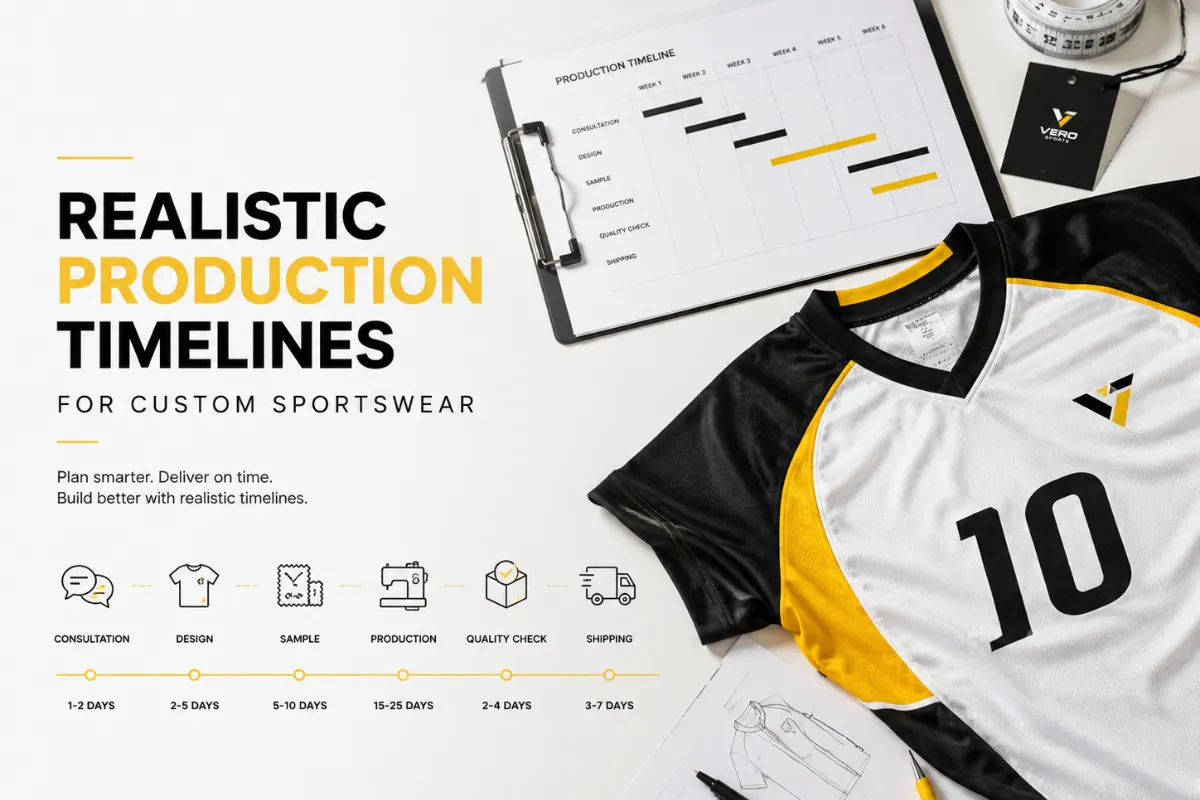
Planning a sportswear collection requires more than creative designs and branding. One of the most important factors is understanding how long manufacturing actually takes.
Many brands assume production begins immediately once designs are approved. In reality, custom sportswear must go through several stages before bulk manufacturing starts.
These stages include product development, material sourcing, sampling, bulk production, and quality inspection. Each step ensures the garments meet the required quality standards.
When brands understand realistic timelines, they can plan launches more effectively. This reduces the risk of delays, unexpected costs, or stock shortages.
This guide explains the full custom sportswear production process and provides realistic timelines for each stage.
How Long Does Custom Sportswear Production Take?
For most brands, the complete manufacturing cycle for custom sportswear usually takes between 40 and 75 days.
This estimate begins after the design details are confirmed and continues until the finished garments are ready for shipment.
The exact timeframe depends on factors such as order size, garment complexity, and fabric availability.
The table below shows the typical timeline for each stage.
| Production Stage | Estimated Time |
| Design confirmation | 2 – 5 days |
| Material sourcing | 5 – 10 days |
| Sample development | 7 – 12 days |
| Sample review and adjustments | 5 – 10 days |
| Production preparation | 3 – 5 days |
| Bulk manufacturing | 20 – 35 days |
| Quality inspection | 3 – 5 days |
| Packaging and shipment preparation | 2 – 4 days |
Total estimated timeline: 40 – 75 days
These timelines represent a realistic production schedule for most custom sportswear orders.
Why Production Timelines Are Often Misjudged
Many brands underestimate production time because they compare custom manufacturing with ready-made products.
Ready-made garments are already produced and stored in warehouses. Custom sportswear, however, must be developed from the beginning.
Another reason for confusion is unrealistic promises from some suppliers. Extremely fast timelines may sound attractive, but they often lead to quality problems or production delays later.
Sampling also takes longer than many brands expect. A single prototype rarely moves directly into production. Most garments require at least one revision to refine fit, construction, or logo placement.
Working with an experienced manufacturer helps avoid these issues. Brands researching suppliers can learn more about this process in our guide on choosing the right sportswear manufacturer, which explains how to evaluate production partners.
Step-by-Step Custom Sportswear Production Timeline
Understanding each production stage makes it easier to plan product launches and inventory.
Below is a detailed breakdown of how the manufacturing process usually works.
1. Product Development and Design Confirmation
Estimated time: 2 – 5 days
This stage focuses on reviewing and confirming all design specifications before sampling begins.
Manufacturers typically examine:
- Fabric requirements
- Garment construction details
- Logo placement
- Printing or embroidery techniques
- Sizing charts and measurements
- Labels and packaging instructions
If a brand provides a complete technical pack, this stage is usually completed quickly.
2. Fabric and Material Sourcing
Estimated time: 5 – 10 days
After confirming the design, the manufacturer begins sourcing the required materials.
Typical materials include:
- Performance fabrics
- Elastic bands and trims
- Zippers and accessories
- Woven labels and tags
- Packaging materials
If fabrics are readily available, sourcing moves quickly. Custom fabrics or special colours may increase the timeline.
3. Sample Development
Estimated time: 7 – 12 days
Sampling allows brands to evaluate the product before full production begins.
During this stage, the manufacturer produces a prototype garment using the selected materials and specifications.
Brands use the sample to check:
- Fit and comfort
- Fabric performance
- Logo placement
- Construction quality
- Overall appearance
This stage is essential because it ensures the design performs as expected.
4. Sample Review and Adjustments
Estimated time: 5 – 10 days
Once the brand receives the sample, it is reviewed and tested.
Design teams often request small adjustments before approving bulk production.
Common changes include:
- Fit improvements
- Logo size adjustments
- Fabric replacements
- Minor construction modifications
Most products go through one or two revisions before final approval.
5. Production Preparation
Estimated time: 3 – 5 days
After the sample is approved, the factory prepares the production line.
Preparation involves several technical steps:
- Material purchasing
- Production scheduling
- Fabric cutting preparation
- Print screen setup
- Embroidery digitising
Proper preparation ensures bulk production runs smoothly.
6. Bulk Production
Estimated time: 20 – 35 days
Bulk production is the stage where the entire order is manufactured.
The process usually includes:
- Fabric cutting
- Garment stitching
- Printing or embroidery
- Assembly and finishing
Production speed varies depending on the type of garment.
| Product Type | Production Complexity |
| Training shirts | Low |
| Tracksuits | Medium |
| Sports jackets | High |
More complex garments require additional production time.
7. Quality Inspection
Estimated time: 3 – 5 days
Quality control protects the brand’s reputation by ensuring every garment meets the required standard.
Manufacturers typically check:
- Stitch strength
- Garment measurements
- Fabric consistency
- Print durability
- Overall finishing quality
Professional factories perform inspections at multiple stages during production.
8. Packaging and Shipment Preparation
Estimated time: 2 – 4 days
Once garments pass inspection, they move to the packaging stage.
This stage usually includes:
- Garment folding
- Attaching labels and tags
- Polybag packaging
- Carton packing
- Preparing export documentation
Proper packaging protects the garments during international shipping.
Common Production Planning Mistakes Brands Make
Production delays often occur because brands underestimate the preparation required before manufacturing begins.
Common issues include:
- Planning marketing campaigns before production starts
- Providing incomplete design specifications
- Changing designs during bulk manufacturing
- Underestimating the time required for sampling
- Choosing suppliers based only on price or speed
Brands sourcing from overseas manufacturers often face these challenges. Our article on common mistakes when sourcing sportswear overseas explains how to avoid many of these problems.
How Brands Can Reduce Production Delays
While production cannot be rushed without risk, brands can take steps to keep the process efficient.
| Best Practice | Benefit |
| Provide a complete tech pack | Reduces design clarification time |
| Confirm branding elements early | Prevents repeated sample revisions |
| Approve samples quickly | Keeps production schedule on track |
| Choose available fabrics | Reduces sourcing delays |
| Communicate clearly with the manufacturer | Avoids misunderstandings |
Preparation is often the biggest factor in maintaining efficient production timelines.
When Should Brands Begin Production Planning?
Successful sportswear brands usually plan production several months in advance.
This approach allows enough time for development, revisions, and manufacturing.
| Collection Season | Production Planning Start |
| Spring | December – January |
| Summer | February – March |
| Autumn | May – June |
| Winter | July – August |
Planning early also provides flexibility if adjustments are needed during sampling.
Frequently Asked Questions
Most orders take 40 to 75 days from design confirmation to shipment preparation.
Sampling ensures the garment fits correctly and performs well. Without proper sampling, defects may appear during bulk production.
Simple garments or smaller orders may be produced faster. However, rushing production often increases the risk of quality issues.
Common causes include incomplete tech packs, delayed sample approvals, fabric sourcing issues, and design changes during production.
Final Thoughts
Custom sportswear manufacturing involves several stages that ensure the final product meets quality standards.
Brands that understand realistic production timelines are better prepared to launch collections successfully. Proper planning also reduces the risk of delays and unexpected costs.
Working with a reliable manufacturing partner can make the entire process smoother. Transparent communication, structured production planning, and consistent quality control all contribute to successful long-term partnerships.


